
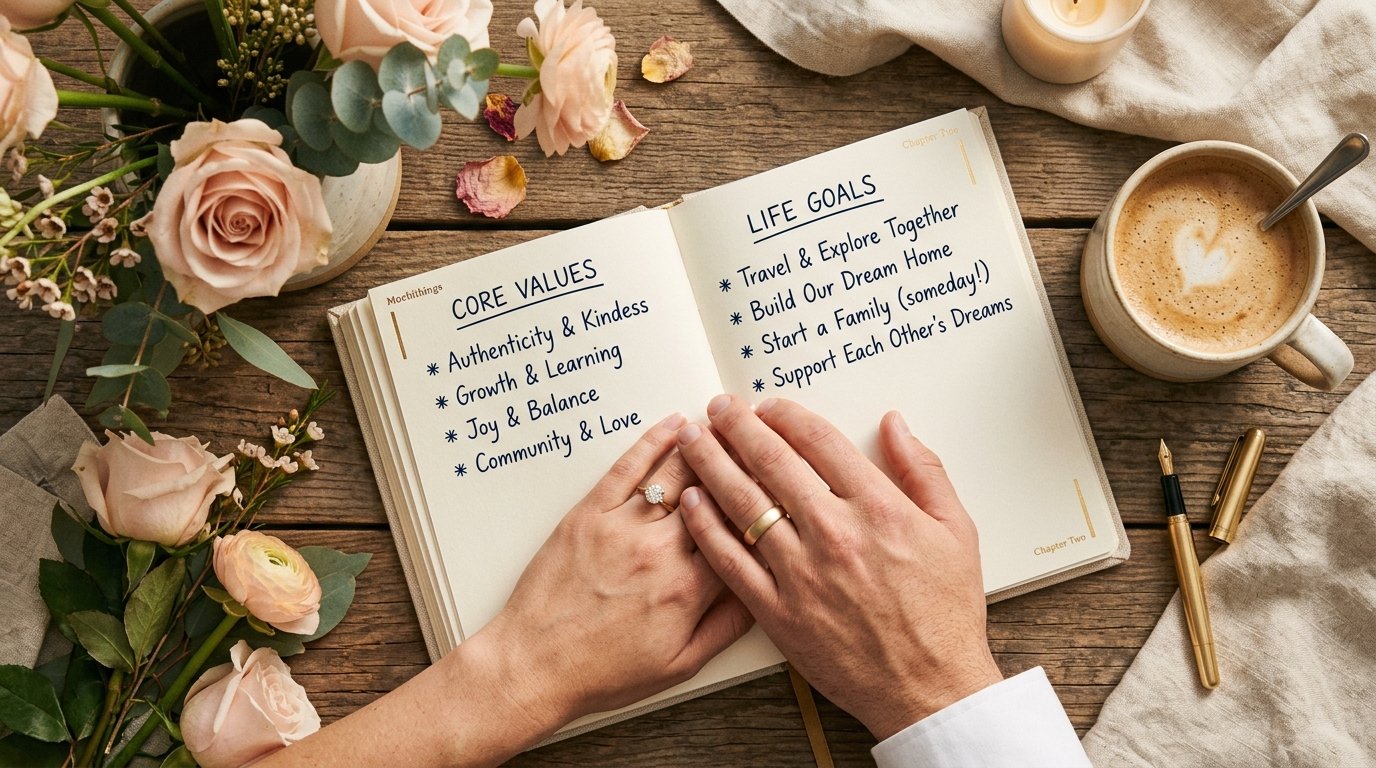
There is a question that most couples never think to ask each other before getting married — what do you truly value in life? Not what you like to eat or which movies you enjoy. But the deeper stuff. The non-negotiables. The things that define who you are at your core. And honestly, not asking this question is one of the biggest reasons relationships crumble after the honeymoon phase fades.
What Are Core Values, Really?
Core values are the fundamental beliefs that drive your behaviour, your decisions, and your priorities. They are not things you can easily change or compromise on — they are wired into who you are. For some people, family comes above everything else. For others, personal freedom and independence are sacred. Some people value financial security above all, while others prioritize experiences and adventure. Some believe deeply in religion and want it to be central to their household. Others are spiritual but not religious. Some value ambition and career growth. Others want a slow, peaceful life. None of these values are right or wrong. But when two people with fundamentally opposing core values try to build a life together, the friction becomes unbearable over time. And that is the problem — most couples discover this too late.
Why Compatibility Goes Beyond Chemistry
We have all seen it. Two people who are madly in love, who cannot stop talking about each other, who seem like the perfect couple on social media. And then, two years into the marriage, everything falls apart. How does that happen? Because chemistry is not compatibility. You can be wildly attracted to someone and still be completely wrong for each other on a values level. Physical attraction fades. The butterflies settle. And what you are left with is two real people trying to share a real life. If your values align, you can weather almost anything — financial stress, health problems, family drama. But if your values clash, even the smallest disagreements become explosive because they are rooted in something much deeper than the argument itself.
The Conversations Nobody Wants to Have
Let me be honest. Talking about core values is not romantic. Nobody wants to sit across from their partner over a candle-lit dinner and discuss their stance on joint bank accounts or how they plan to handle aging parents. But these are the conversations that determine whether your marriage survives its first real test. How do you feel about money — are you a saver or a spender? Do you want children, and if yes, how many and when? How involved should in-laws be in your daily life? What role does religion play in your household? How do you handle anger — do you talk it out or do you need space? What does loyalty mean to you? What does respect look like in your eyes? These are not comfortable topics. But avoiding them does not make them go away. It just delays the conflict to a point where it becomes much harder to resolve.
How to Actually Identify Your Core Values
Most people have never sat down and consciously listed out their core values. They just feel them. And that is part of the problem — if you cannot articulate what you value, how can you communicate it to your partner? Start simple. Think about what makes you angry. Anger usually surfaces when a core value is being violated. If you get furious when someone disrespects your time, then respect and punctuality are core values for you. If it bothers you when your partner makes big decisions without consulting you, then partnership and equality matter deeply to you. If you feel suffocated when someone is too clingy, then independence is one of your core values. Write these down. Discuss them with your partner. You will be surprised how much clarity a simple exercise like this can bring to a relationship.
Shared Values Are the Glue
Couples who share core values do not necessarily agree on everything. They still argue about who forgot to buy groceries or who left the fan on. But on the things that truly matter — how they raise their children, how they spend their money, how they treat each other's families, what kind of life they want to build — they are on the same page. And that alignment creates a sense of safety and trust that no amount of romantic gestures can replace. When you know that your partner fundamentally wants the same kind of life you do, you stop second-guessing the relationship. You stop keeping score. You stop feeling like you are pulling in opposite directions. That is the power of shared values.
Do This Before You Say Your Vows
If you are engaged or planning to get married, please do not skip this step. Sit down together — without phones, without distractions — and talk about what matters most to each of you. Be honest, even if it is uncomfortable. Listen to your partner without judgment. You do not need to have identical values, but you do need to understand each other's values and figure out if you can build a life that honours both. If you are finding it hard to have these conversations on your own, consider speaking to a counsellor. A good pre marriage counsellor can help you navigate these discussions in a structured, healthy way. Because at the end of the day, the strongest marriages are not built on passion alone. They are built on two people who looked at each other's values and said — yes, I can build a life with this person.