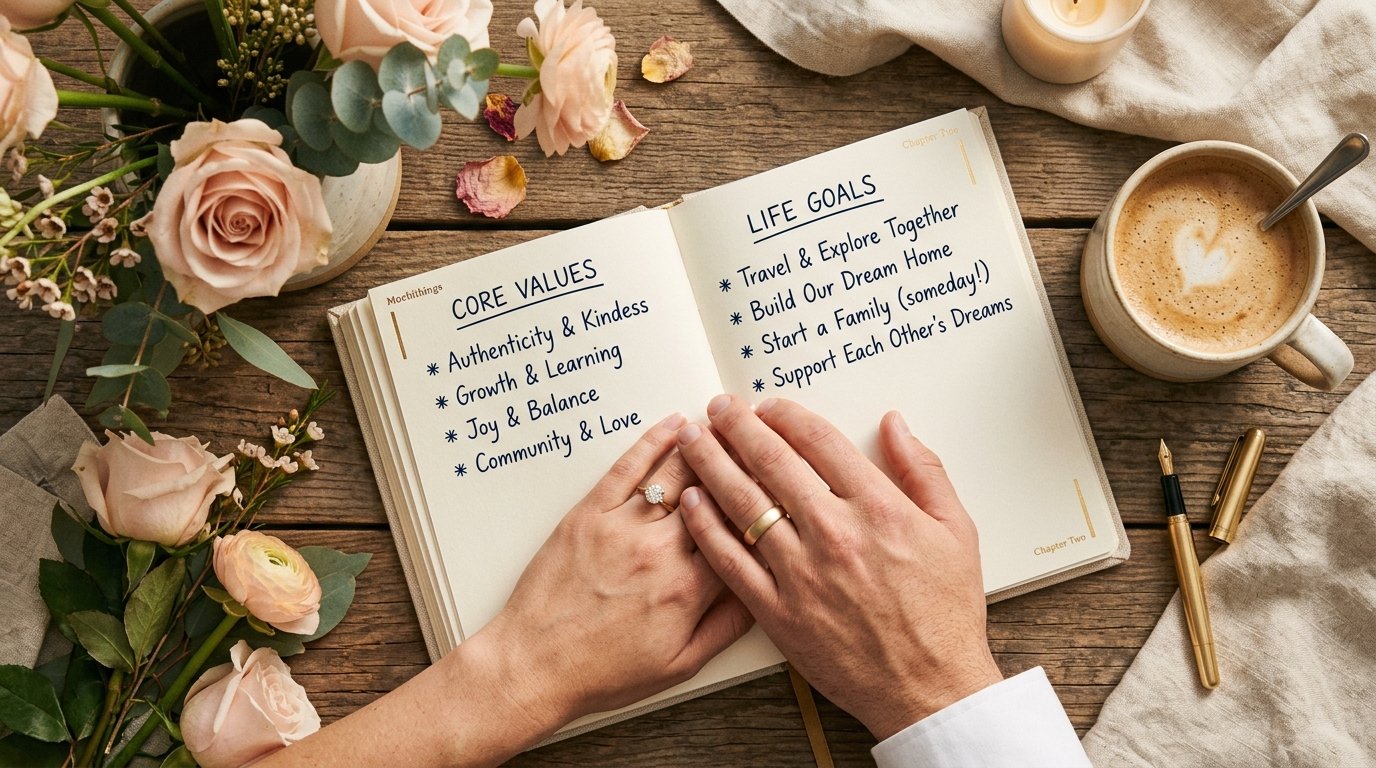
Marriage is not slavery for either of the spouses. It is based on a love relationship deeply rooted in freedom. Each partner is free from the other. Where there is control or perception of control, there is not love. Love only exists where there is freedom. And that is precisely why boundaries are not just important in a marriage — they are absolutely essential for it to survive and thrive.
The Myth of Two Becoming One
There is this deeply romanticized idea in our culture that when two people get married, they become one. One household, one identity, one life. And while that sounds poetic, it is also dangerously misleading. Because when you erase the line between two individuals completely, you do not get unity — you get enmeshment. And enmeshment is where relationships go to die. You are still two separate human beings with your own thoughts, feelings, preferences, past experiences, and dreams. Marriage does not erase any of that. It is supposed to be a partnership between two whole individuals, not a merger where one person disappears into the other. The moment someone starts losing their individuality in a marriage is the moment resentment begins to build — quietly, slowly, and dangerously.
What Do Boundaries Actually Look Like?
When people hear the word "boundaries" in the context of marriage, they often misunderstand it. They think it means building walls. Being cold. Keeping secrets. That is not what boundaries are. Boundaries are simply the lines that define where one person ends and the other begins. They are about respect. They look like this — not reading your partner's personal messages without permission. Not making major financial decisions without discussion. Not dismissing your partner's feelings because you do not understand them. Not using anger or guilt to manipulate the other person into doing what you want. Giving each other space to have friendships outside the marriage. Allowing each other to have hobbies and interests that are not shared. These are not signs of a distant marriage. These are signs of a healthy one.
Control Is Not Love
Let us be very direct about this. If your partner tells you what to wear, who to talk to, how to spend your money, or monitors your phone — that is not love. That is control. And it does not matter how many times someone says they are doing it because they care. Caring does not look like surveillance. It does not look like jealousy dressed up as protectiveness. It does not look like someone making you feel guilty for having a life outside of the marriage. True love is secure. It does not need to control because it trusts. And trust is the soil in which boundaries grow naturally. When you trust your partner, you do not feel the need to invade their space. And when your partner trusts you, they give you the room to breathe.
Why Couples Struggle With Boundaries
Most couples struggle with boundaries because they were never taught what healthy ones look like. If you grew up in a household where your parents had no boundaries — where emotions were explosive, privacy was nonexistent, and control was disguised as love — then you probably carry those patterns into your own marriage without even realizing it. You might feel threatened when your partner asks for alone time. You might feel abandoned when they do not include you in every decision. You might feel unloved when they have friends or interests that do not involve you. But none of those feelings reflect reality. They reflect old wounds. And the only way to heal them is to first recognize them, and then consciously build healthier patterns with your partner.
Boundaries Protect the Marriage, Not Threaten It
Here is the truth that most people miss — boundaries do not weaken a marriage. They strengthen it. When both partners have a clear sense of self, they bring more to the relationship, not less. They are happier, more fulfilled, and less likely to project their insecurities onto each other. They fight less because there is less resentment simmering beneath the surface. They communicate better because they know where each other stands. And they love more freely because the love is given out of choice, not obligation. A marriage without boundaries is like a garden without a fence — eventually, everything gets trampled. But when you set clear, respectful boundaries, you create a space where both partners can grow individually and together.
How to Start Setting Boundaries
If you and your partner have never explicitly discussed boundaries, now is the time. Start with the basics. Talk about personal space — how much alone time does each of you need? Discuss finances — should all spending be joint, or is there room for individual spending? Talk about family involvement — how much say do your parents or in-laws get in your decisions as a couple? Discuss digital privacy — are phones open territory, or does each person have a right to privacy? And most importantly, talk about emotional boundaries — how do you handle disagreements? Is name-calling acceptable? Is the silent treatment fair? What happens when one of you is angry? These conversations do not have to be heavy or confrontational. They can be calm, honest, and even loving. Because setting boundaries is not about building walls between you. It is about building a foundation of mutual respect that makes your marriage a place where both of you feel safe, valued, and genuinely free to be yourselves.
The Final Word
Marriage should never feel like a cage. If it does, something is wrong — and that something is usually a lack of healthy boundaries. The best marriages are the ones where both partners wake up every day and choose each other freely, not because they have to, but because they want to. That kind of love does not happen by accident. It happens when two people respect each other enough to say — I love you, and I also love myself. And that is where boundaries live.